Serving Tidewater · Mon–Fri 9:00 – 5:00
Decking Guide · Updated September 2026
Face screws aren't the only way to fasten a deck board. Here's how hidden deck fasteners actually work, the different systems on the market, and the one we install on nearly every composite and PVC deck we build.
Hidden deck fasteners are any fastening system that attaches a deck board without driving a screw straight down through its visible face. Instead of a row of screw heads running the length of every board, the fastener sits in a groove along the board's edge or gets capped with a plug, so the finished surface reads as one clean, uninterrupted plane.
If you've searched for composite deck screws, deck clips, or hidden deck screws, you've likely already run into a few different approaches, and they are not all the same product wearing different names. Some are clip systems that only work with a specific board's milled edge. Others are plug-and-screw systems that work across brands and materials. Knowing the difference matters before you pick one.
A face-screwed deck isn't wrong, plenty of solid decks are built that way, but hidden fasteners solve a few real problems at once. The obvious one is looks: no dark dots marching down every board. Less obvious is that a face screw punches straight through the board's factory-sealed surface, creating a small entry point for moisture on composite and PVC boards that are otherwise built to shed water. A hidden clip or edge-driven screw leaves that top surface completely intact.
Hidden systems also tend to let a board move the way it's supposed to. Composite and PVC decking expands and contracts with temperature more than wood does, and a fastener anchored at the edge accommodates that movement more naturally than a screw pinning the board flat at dozens of points across its face.
"Hidden fasteners" covers a few genuinely different products, and the right one depends heavily on what board you're installing:
| System | How It Works | Best For |
|---|---|---|
| Face screws & glue-in plugs | Screw driven straight down through the board, small plug glued over the head afterward | Budget wood decks; the simplest tool requirement |
| Hidden deck clips | Clips fit into a groove milled into the board's edge and screw down into the joist below | Composite and PVC boards manufactured with a grooved edge |
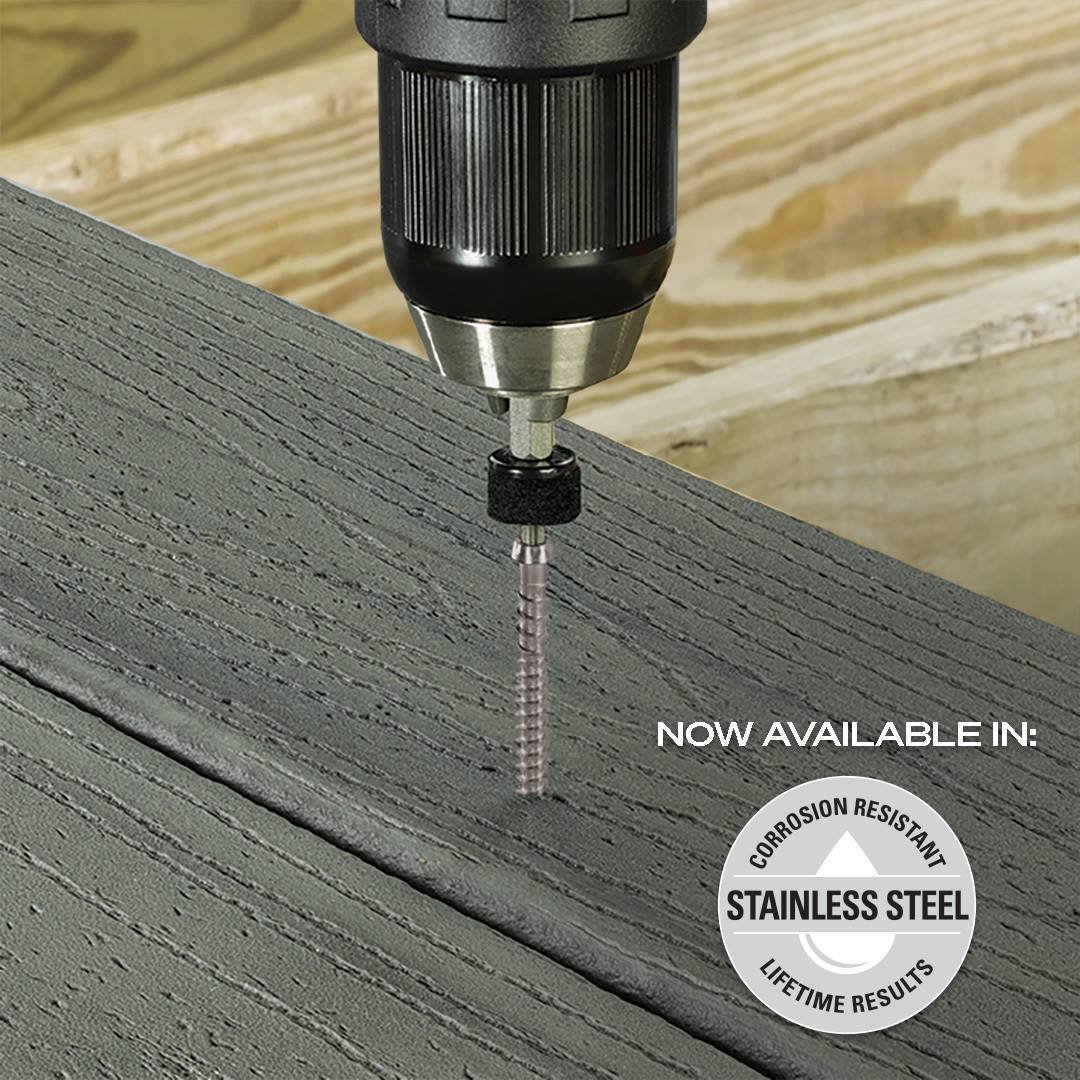
| Cortex collated fastening system | Angled screw driven through the board's edge with a guide bit, then capped with a color-matched plug | Composite, PVC and wood decking; the system we use most |
| Track & rail systems | A continuous track fastens to the joists first, then boards clip into the track | Specific manufacturer board systems built around their own track |
Deck clips only fit the exact groove profile they're designed for, which is the biggest limitation homeowners run into when they've already picked a board and then go looking for a hidden fastener.
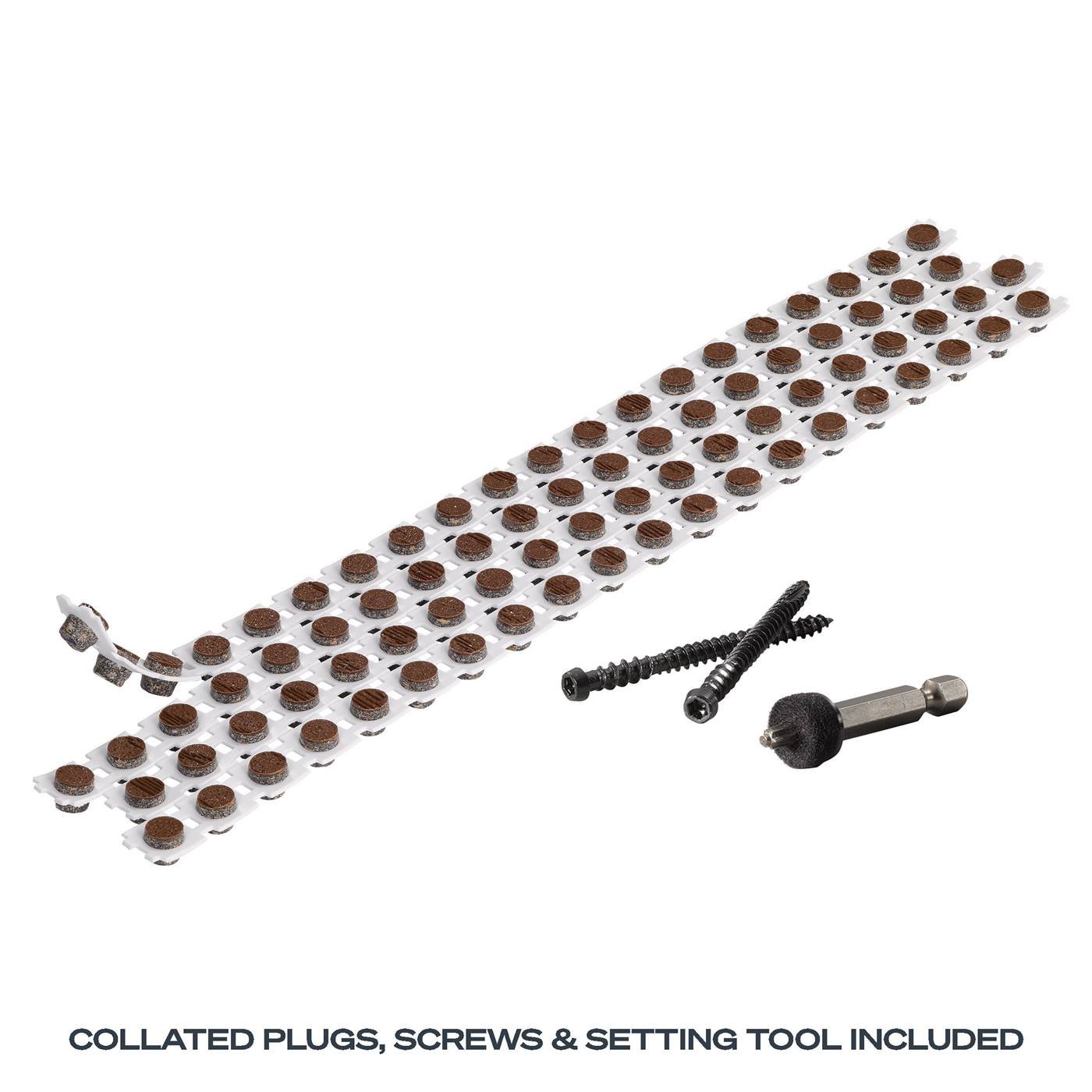
We standardized on FastenMaster's Cortex Hidden Fastening System for a simple reason: it isn't locked to one board brand. The plugs are made from the same material as leading composite and PVC decking, color-matched to disappear into boards from Trex, TimberTech, Fiberon and others, so we're never choosing a fastener before we've chosen a board, or forcing a client into a specific brand just because that's what our clip system happens to fit.
The plugs come pre-loaded on a collated strip instead of a loose bag you fish through one at a time, which is where the real time savings come from on install day. The screws are available in stainless steel, which matters here more than in a lot of climates, and Cortex carries a warranty for the life of the project rather than a fixed number of years.
Product overview video from FastenMaster, the manufacturer.
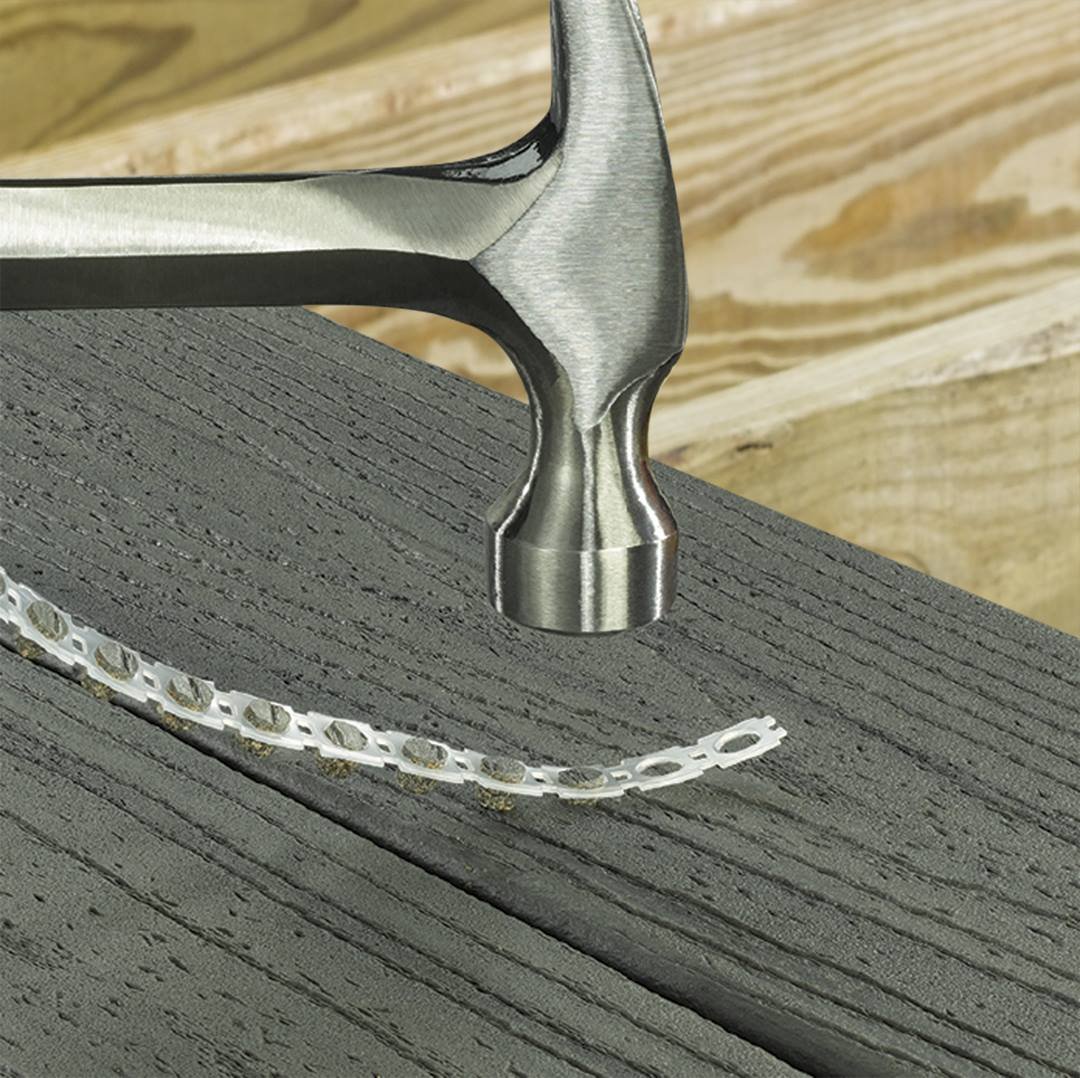
The installer drives a specialized guide bit at an angle through the top edge of the board and into the joist below, then drives the stainless screw through that same pocket. From the top of the deck, that screw is already invisible, it's sitting in the edge, not the face. The last step is setting a plug from the collated strip into the small pocket the guide bit left behind and tapping it flush, which is the part shown in the photo below.
The guide bit's foam collar keeps the pocket depth consistent from board to board, which is a big part of why the finished plugs sit flush instead of proud or sunken.
Not every hidden fastener on the shelf is worth the upcharge over standard screws. A few things worth checking before committing to one:
Made from the same material as leading deck board brands, so the plug reads as part of the board instead of a patch on top of it.
Corrosion-resistant screws built for coastal humidity and salt air, not just dry inland climates.
A pre-aligned strip of plugs and screws installs up to 50% faster than fumbling through a loose bag, per FastenMaster's own testing.
Works across composite, PVC and wood decking instead of locking a project into one manufacturer's proprietary clip.
Ashleigh and I have been building decks across Hampton Roads since 2017, and the fastening system is one of those decisions clients rarely think to ask about until they've already seen a deck where it went wrong, screw heads bleeding rust down a board, or plugs a shade off from the decking around them. We settled on Cortex because it holds up in this climate and because it doesn't box a client into a single decking brand before we've even talked about what they actually want. If a project calls for a different system, wood decking with a tight budget, or a board manufacturer with its own proprietary clip, we'll say so plainly and explain the tradeoff instead of defaulting to what's easiest for us.
Hidden deck fasteners are any fastening system that attaches a deck board without driving a screw straight through its visible face. Instead, a clip grips a groove milled into the board's edge, or a screw goes in at an angle through the edge and gets capped with a color-matched plug, so the finished deck has no visible screw heads running down the boards.
For composite and PVC decking, yes, in most cases. Hidden fasteners give a cleaner, more finished look, avoid the small moisture-entry points a face screw creates, and let the board expand and contract more naturally. Face screws still make sense on some wood decks or tight budgets where a hidden system isn't practical.
Cortex is a hidden fastening system from FastenMaster that uses an angled screw driven through the edge of a deck board, then hidden under a color-matched plug that comes pre-loaded on a collated strip. It's designed to match the color of leading composite and PVC decking brands and is backed by a warranty for the life of the project.
Both, with caveats. Composite and PVC boards are usually manufactured with a grooved edge specifically designed for clip-style hidden fasteners, which makes those systems a natural fit. Wood decking doesn't have that groove, but a plug-and-screw system like Cortex still works on wood, since it drives through the edge rather than relying on a milled groove.
It depends on the system. Loose clips and loose plugs both add real time on site. Collated systems close most of that gap, FastenMaster's own independent time studies found collated Cortex plugs install up to 50% faster than loose plugs, which is a big part of why we standardized on it.
Hidden fastener clips generally require a grooved board edge, so they're a new-build or full-resurface decision, not something you retrofit onto boards already fastened with face screws. A plug-and-screw system like Cortex has more flexibility since it doesn't depend on a factory-milled groove, but replacing individual boards on an older deck is still the more common approach for repairs.
Written by Ashleigh & Joey, Evoke Design + Build
Husband-and-wife design-build team serving Hampton Roads since 2017. Ashleigh handles design, Joey runs construction. Licensed & insured contractor. Read more about us →
We'll walk you through every fastening and material option before the first board goes down.