Serving Tidewater · Mon–Fri 9:00 – 5:00
Deck Framing Guide · Updated September 2026
Short answer: moisture, fungus, and time — and the part of your deck most exposed to all three is whatever's in or touching the ground. Here's what wood decay actually is, why ground-contact posts and framing decay years before the rest of the deck shows any wear, and how we protect them.
Wood decay is the breakdown of wood by fungi that feed on the cellulose and lignin that give wood its structure. Most people just call it wood rot, and it's the same thing — decay is the biological process, rot is the visible damage it leaves behind. Left alone, it doesn't stop or slow down on its own. It steadily eats away at the wood's strength until the piece can no longer do its job.
On a deck, that's a real structural question, not a cosmetic one. Decay in a deck board is an eyesore. Decay in a post or a piece of framing is a load-bearing problem.
Decay fungus needs a few specific conditions to take hold: enough oxygen, a comfortable temperature, and — the big one — enough moisture. Wood generally needs to sit above roughly 27-30% moisture content before decay fungi can really get established. A deck board that gets rained on and dries out in the sun every day rarely stays wet long enough to hit that number. A post buried in the ground, or framing sitting low where water collects and doesn't drain away, can stay above that threshold for weeks at a time.
That's why the posts and framing in ground contact are almost always the first part of a deck to decay — often years before the decking surface people actually walk on shows any real wear.
Not all decay looks or behaves the same way. The three general categories show up differently and matter for different reasons:
| Type | What It Looks Like | Where It Shows Up Most |
|---|---|---|
| Brown rot | Wood breaks into dry, brown cubes that crumble easily | Softwood framing lumber — the type most decks are built from |
| White rot | Wood turns whitish, stringy, and soft or spongy | More common in hardwoods than the pine typically used for decks |
| Soft rot | Surface-level softening and darkening | Very wet conditions, often alongside brown or white rot |
Brown rot is the one we see most often in deck framing and posts, since most decks are framed from pine and other softwoods.
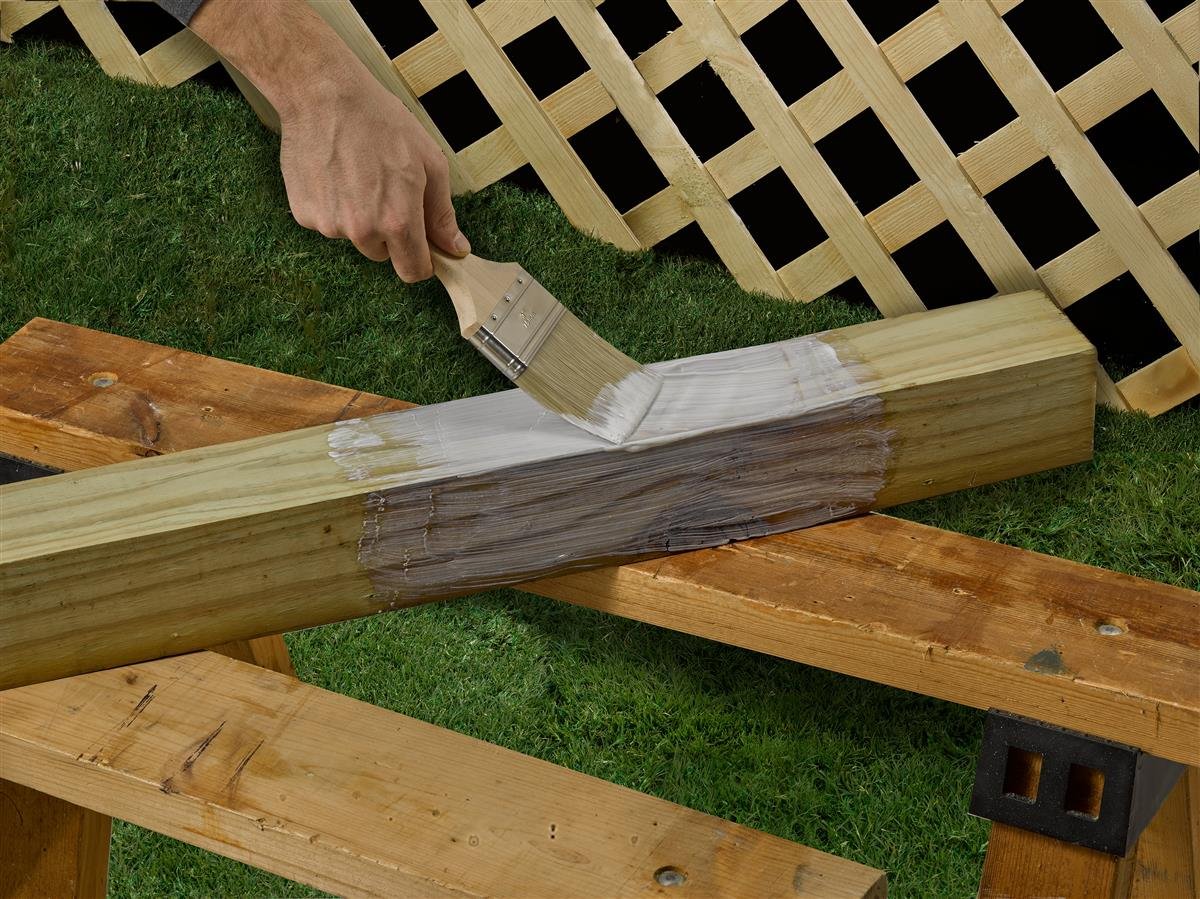
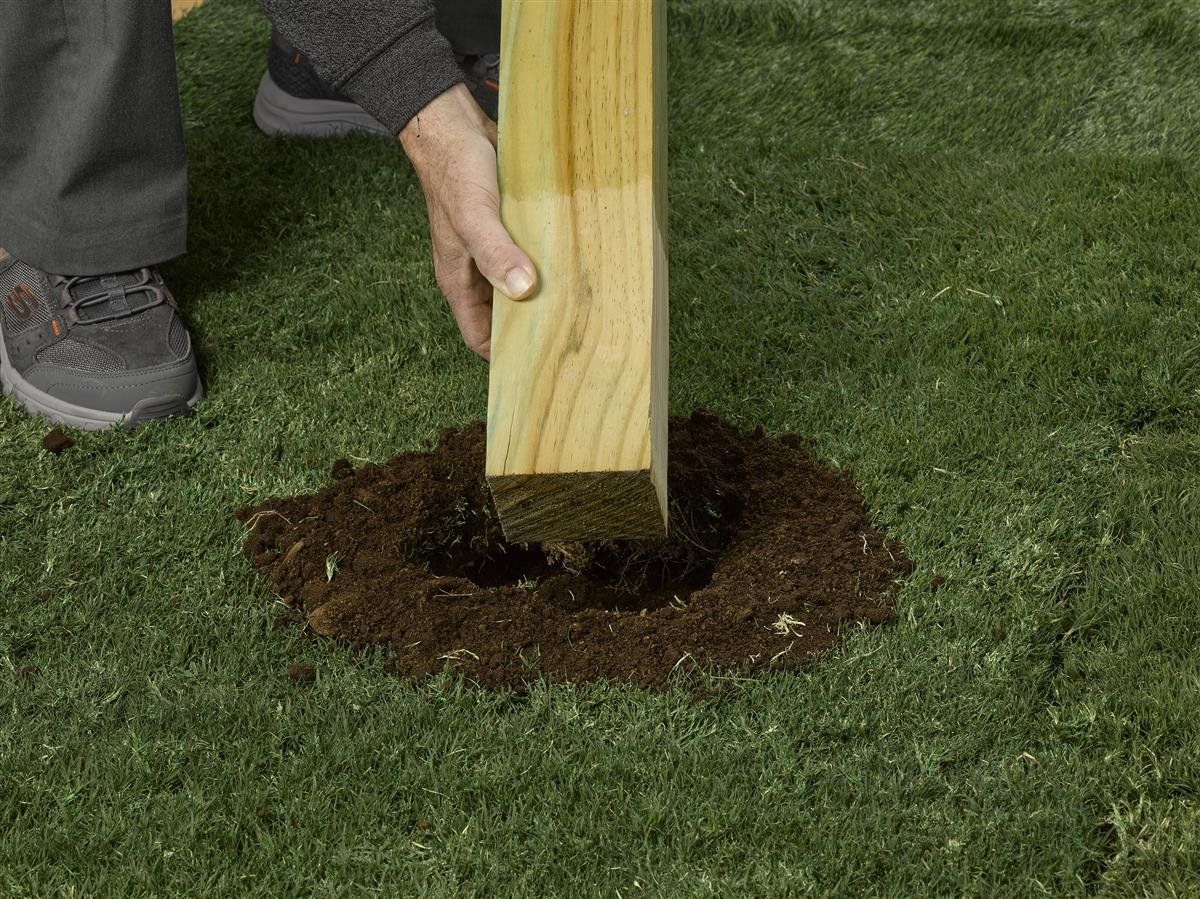
Prevention starts with the lumber itself — pressure-treated wood rated specifically for ground contact, not standard pressure-treated lumber, which isn't rated for that level of moisture exposure. But the treatment only protects the wood evenly if every surface is sealed, and cutting a post to length exposes fresh, untreated end grain right where it's about to go into the ground.
That's the gap FastenMaster's Ground Contact Coating closes. We brush it onto cut ends and other ground-contact surfaces before a post goes in the ground — it goes on white so you can see exactly where it's covered, dries clear, and forms a waterproof barrier that resists the insects and fungus that cause rot. It dries quickly enough that we're not standing around waiting on it, and it doesn't need bags or tape over the post while it cures.
Product overview video from FastenMaster, the manufacturer.
A few checks worth doing on any deck more than a few years old, especially around posts and anywhere framing sits close to the ground:
Beyond sealing cut ends, a few other things go into keeping a deck's framing dry over the long run:
Ground-contact-rated pressure-treated lumber for anything buried or resting on the ground — not a downgrade to save a few dollars on material.
The same moisture that rots a post can rot a poorly flashed ledger board. See how we flash a ledger →
A yard that drains toward your posts instead of away from them keeps the soil around them wet far longer than it should be.
Framing that can actually dry out between rains decays slower than framing boxed in with no airflow at all.
Ashleigh and I have been building decks across Hampton Roads since 2017, and sealing ground-contact posts isn't a step we skip to save an afternoon. Every cut end that's about to go into the ground gets coated before it goes in, not after someone notices a problem. Coastal humidity, salt air, and a real freeze-thaw cycle every winter all work against wood out here faster than they would somewhere dry, so a step that's optional in some climates isn't optional in ours. If we find decay in an existing post or piece of framing during a repair, we would rather tell you honestly what we found and what it will take to fix than build around a problem and let it become next year's emergency.
Wood decay is the breakdown of wood by fungi that feed on the cellulose and lignin inside it. "Wood rot" is the common name for the same thing — the fungus needs enough moisture, oxygen, and a comfortable temperature to take hold, and once it does, it steadily destroys the wood's structural strength from the inside out.
The part of a deck post buried in or resting against the ground stays damp far longer than the rest of the structure, and that constant moisture is exactly what decay fungi need to establish and spread. It's why ground-contact posts and framing decay years before the decking boards up top show any wear at all.
They're the same thing described two ways. "Wood decay" is the more technical, biological term for the fungal breakdown process; "wood rot" is what most people call the visible result — soft, crumbly, or discolored wood. We use both terms for the same damage.
It starts with pressure-treated lumber rated for ground contact, since standard pressure-treated lumber isn't rated for the moisture exposure a buried or ground-adjacent post sees. On top of that, we coat cut ends and ground-contact surfaces with FastenMaster's Ground Contact Coating, which seals out moisture and resists the insects and fungus that cause rot.
We use FastenMaster's Ground Contact Coating on deck posts and ground-contact framing. It goes on white and dries clear, forms a waterproof barrier, and resists the insects and fungus that cause rot — without needing bags or tape over the post while it cures.
No. Once fungus has broken down a section of wood, that section has lost its structural strength permanently and needs to be replaced, not treated. The real leverage is in prevention — the right lumber, sealed cut ends, and keeping water moving away from the wood — not trying to reverse decay after it's already there.
Written by Ashleigh & Joey, Evoke Design + Build
Husband-and-wife design-build team serving Hampton Roads since 2017. Ashleigh handles design, Joey runs construction. Licensed & insured contractor. Read more about us →
We'll take a real look at what's in the ground, not just the surface, and tell you honestly what it needs.