Serving Tidewater · Mon–Fri 9:00 – 5:00
Railing Guide · Updated September 2026
Short answer: aluminum, vinyl, cable, wood and composite are the five you'll run into. Here's what each one actually looks and lives like, and the two we'd point you toward for a porch specifically.
Railing is one of those details that gets noticed the moment it's wrong — loose, outdated, or blocking a view it shouldn't. Search "porch railing types" and you'll find half a dozen materials thrown at you at once. In practice, most Hampton Roads porches end up choosing between aluminum, vinyl, and cable, with wood and composite showing up more often on decks than on a formal front porch.
We install aluminum, vinyl and cable railing. That's not the whole list of what exists — it's the list of what holds up to coastal weather without turning into a repainting chore. Below is the full picture, including the materials we don't install, so you know what you're actually choosing between.
Aluminum gives you the thinnest, most modern-looking baluster profile of any material on this list, and it holds up to coastal weather without rusting or needing to be repainted. It's a strong choice when you want the railing itself to disappear a little and let the view or the porch design do the talking.
It comes in a handful of standard colors (usually black, white and bronze) and mounts to wood, composite, or concrete without much fuss. Vertical aluminum balusters read as more traditional than cable, but still cleaner than a painted wood spindle rail.
Vinyl is the most budget-friendly low-maintenance option, and it offers the widest range of colors and profiles for matching an existing home's trim. It won't rot, splinter, or need to be painted, which is most of the appeal on a front porch that's meant to look sharp with zero yearly upkeep.
The tradeoff is that vinyl posts and balusters run a bit thicker than aluminum, so it leans slightly more traditional in profile. For a classic white porch rail, though, it's usually the right call.
Cable railing swaps balusters for thin horizontal steel wires, and it's the most modern-looking option by a wide margin. Because the cables are so thin, it nearly disappears against a water view or a landscaped yard — the opposite approach from a traditional spindle rail that frames the porch.
Cable does need its tension checked periodically, since the wires can loosen slightly over time, but it never needs painting. It's a strong fit for a modern-style home or a porch that opens onto a view you don't want interrupted.
Wood railing is the classic look and the least expensive to install upfront, but it needs regular painting or staining to hold up, and coastal humidity is hard on it over time. Composite railing blends wood fibers with polymers for a lower-maintenance alternative that still looks similar to wood — it's more common on composite decks than on a formal front porch, since the profile tends to be bulkier than aluminum or vinyl. You'll also see glass panel and wrought-iron-look railing on higher-end or more architectural homes; both exist, but they're less common in Hampton Roads than the five materials above.
Beyond the code minimums, style is where railing really changes the feel of a space. Horizontal cable runs read as modern and nearly disappear against a view. Vertical aluminum balusters give a more traditional look without the upkeep of painted wood. Vinyl offers the most color and profile options for matching an existing home's trim exactly. If you're weighing options for a specific porch design, matching the railing style to the era and trim of the house matters more than picking whatever's trending — a craftsman-style bungalow and a modern coastal build call for different rail profiles even in the same material.
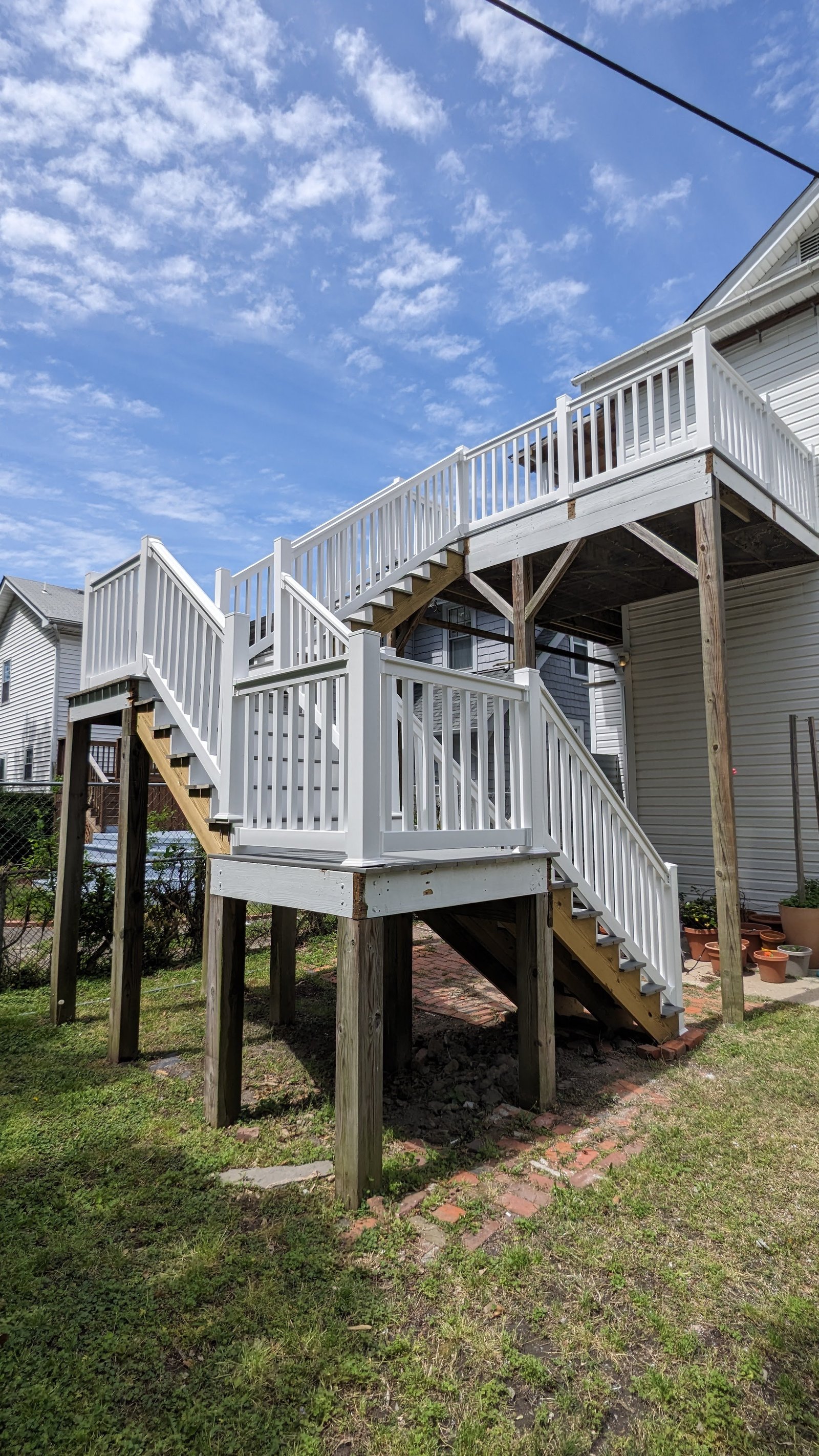
Local code sets minimum height and baluster spacing requirements, and we build to meet or exceed those standards on every job, whether it's a first-floor porch railing or a second-story balcony rail with a taller requirement. Under the residential code most of Virginia follows, a guard is required once the walking surface is more than 30 inches above grade, and the minimum height for that guard is 36 inches.
These are the general residential code minimums — always confirm the exact requirement with your local building department, since some Hampton Roads cities and counties adjust them. We also handle stair rail transitions, which are often the trickiest part of a railing job to get looking clean and code-compliant at the same time.
| Material | Look | Maintenance | We Install It? |
|---|---|---|---|
| Aluminum | Thin, modern, traditional baluster layout | Very low — never needs painting | Yes |
| Vinyl | Classic, widest color/profile range | Very low — rinse only | Yes |
| Cable | Most modern, nearly disappears against a view | Low — periodic tension check | Yes |
| Wood | Classic, most traditional | High — regular paint or stain | No |
| Composite | Similar to wood, bulkier profile | Low, but bulkier than aluminum/vinyl | No |
"We install it" reflects what we build in Hampton Roads specifically — wood and composite railing exist and work fine elsewhere, they just aren't part of what we offer.
We size and install every run to fit your specific porch or deck, not a generic kit off a shelf. Aluminum and vinyl hold up well to coastal weather without the upkeep of painted wood, and cable gives a clean, modern look when that's the direction you want to go. See our full Railing service →
The most common types are aluminum, vinyl, cable, wood and composite. Aluminum gives a thin, modern profile with almost no upkeep. Vinyl is the most budget-friendly low-maintenance option. Cable railing is the most modern look, with thin horizontal wires instead of balusters. Wood and composite are less common for porches specifically but show up often on decks.
We install aluminum, vinyl and cable railing. All three hold up well to coastal Hampton Roads weather without the repainting and upkeep that wood railing needs, and we size and install every run to fit your specific porch or deck rather than a generic kit.
Under the residential building code most of Virginia follows, a guard is required once a porch or deck is more than 30 inches above grade, and the minimum height for that guard is 36 inches. Always confirm the exact requirement with your local building department, since some jurisdictions adjust it.
The standard rule is that a 4-inch sphere cannot pass through any opening in the railing, from the gap under the bottom rail to the space between balusters. On stairs, the allowed gap is slightly larger at 4-3/8 inches between balusters, with a 6-inch sphere rule for the triangular space under the stair rail.
Aluminum and vinyl both need very little upkeep beyond an occasional rinse, and neither one needs to be repainted or resealed the way wood railing does. Cable railing needs periodic tension checks on the wires but no painting either.
In most of Hampton Roads, replacing an existing railing in the same location typically does not trigger a separate permit, but adding a new porch, changing the structure, or building a taller guard usually does. Check with your local building department before starting, since requirements vary by city and county.
Written by Ashleigh & Joey, Evoke Design + Build
Husband-and-wife design-build team serving Hampton Roads since 2017. Ashleigh handles design, Joey runs construction. Licensed & insured contractor. Read more about us →
Tell us what you have in mind and we will walk the space with you.