Serving Tidewater · Mon–Fri 9:00 – 5:00
Deck Styling Guide · Updated August 2026
A deck is furniture, lighting, and plants, but it's also zoning, material choice, and what you do with the space underneath. Here's how Ashleigh actually thinks through it, in an order that holds up in Hampton Roads' heat, humidity, and salt air, not just in a catalog photo.
Before buying a single chair, decide what the deck is actually for: a dining spot, a lounge area, a grilling station, or some combination. Most decks under 300 sq. ft. only really support two zones well. Trying to fit three turns into a furniture showroom, not a place anyone wants to sit. Sketch the zones first, then shop for each one separately.
Scale matters more than style. A loveseat and two chairs around a low table reads more finished than four mismatched pieces crowded onto the same footprint. In Hampton Roads specifically, skip anything that isn't rated for full sun and humidity, untreated wicker and basic fabric cushions won't survive a summer here. Powder-coated aluminum frames and quick-dry outdoor fabric hold up to salt air far better.
One overhead light makes a deck feel like a parking lot. Layer it instead: string lights for ambient glow, low step or post-cap lights for safety and definition, and a portable lamp or lantern on the table for task light when you actually need to see. We build post-cap and step lighting into the framing on most of our custom decks so there's no visible wiring to work around later.
An outdoor-rated rug does more to make a deck feel like a room than almost anything else on this list. Look for polypropylene or solution-dyed acrylic, both shrug off rain and won't fade the way an indoor rug dragged outside will. Same logic for cushions and throws: solution-dyed fabric outlasts printed fabric by years in direct sun.
Not every plant that looks good on Pinterest survives a Tidewater summer. Salt-tolerant, heat-tolerant options like ornamental grasses, lantana, and coastal-hardy hydrangeas do better in planters here than delicate annuals that need constant babying. Group planters instead of lining them up evenly, it reads more intentional and softens hard deck edges without blocking sightlines.
The deck surface itself is the biggest single color decision, and it's the one thing everything else has to work around. Lighter composite and PVC tones stay cooler underfoot and fade more evenly under strong coastal sun than dark wood stains, which also need re-sealing more often out here. Pick your decking tone first, then choose furniture and textiles that sit well against it, not the other way around. TimberTech doesn't publish per-square-foot pricing, but frames most composite or PVC deck projects at $10,000 to $30,000 installed for a small-to-mid-size deck.
An elevated deck leaves dead space below it, and that space is worth designing on purpose instead of ignoring. Skirting gives it a finished look from the yard. Gravel or a paver surface turns it into real usable square footage, a second shaded living area, a dry storage spot, or a play space for kids. It is often the easiest square footage you'll ever add to a property, since the roof is already built for you. See our paver patio & hardscape work → if that's the direction you're leaning.
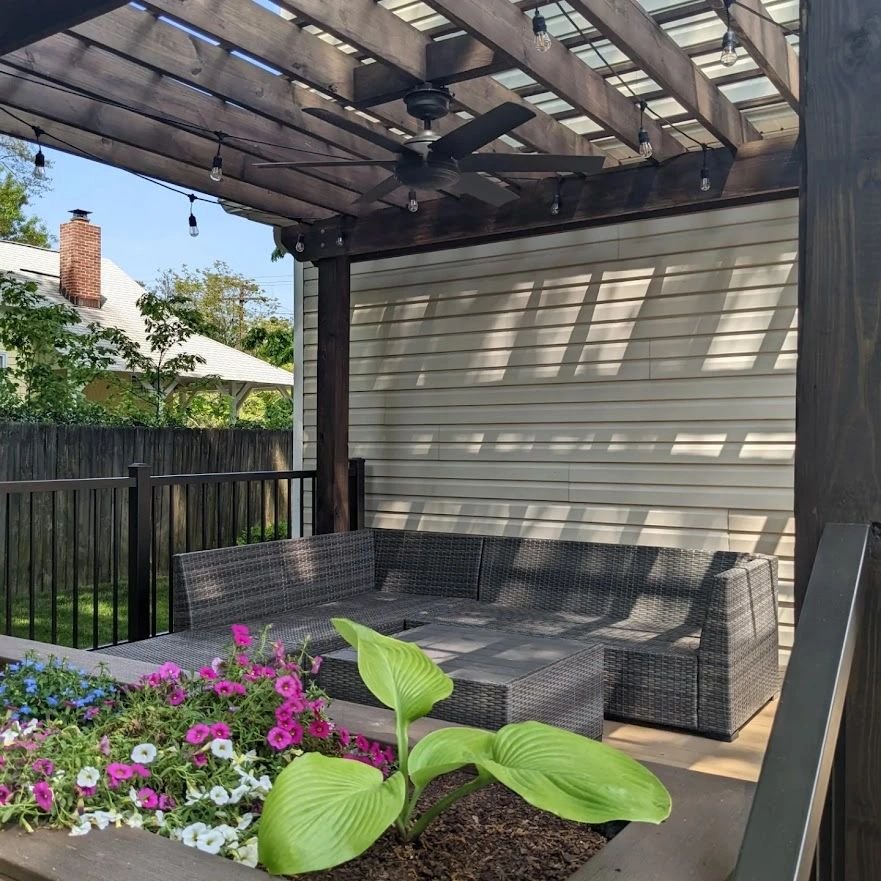
Pick one zone, usually seating, and scale furniture to it before adding anything else. A single well-proportioned loveseat and two chairs reads bigger than four mismatched pieces crammed onto the same footprint.
Skirting for a finished look, gravel or a paver surface for a usable second space, or nothing at all if you want storage access. A paver patio underneath an elevated deck is a common way to turn dead space into real square footage.
Lighter composite or PVC tones show less heat and fade more evenly under strong coastal sun than dark wood stains, which need re-sealing more often against salt air and humidity. Material matters as much as color for longevity here.
TimberTech doesn't publish per-square-foot material pricing, but frames most composite or PVC deck projects at $10,000 to $30,000 installed for a small-to-mid-size deck, rising for larger single-level builds.
Yes. Choose marine-grade or powder-coated hardware, quick-drying outdoor fabrics, and planters in materials that won't crack from freeze-thaw cycles. What works in a dry inland climate often doesn't hold up on the Virginia coast.
Written by Ashleigh & Joey, Evoke Design + Build
Husband-and-wife design-build team serving Hampton Roads since 2017. Ashleigh handles design, Joey runs construction. Licensed & insured contractor. Read more about us →
We can design the deck and the space around it together, from the first sketch.